
Technical Due Diligence for Chinese Diesel Generators
A comprehensive guide to authenticating industrial power equipment, preventing specification fraud, and ensuring global compliance.
Key Risk Areas Resolved in This Guide
Based on 15 years of founder experience at Cool Light Trading working with Chinese manufacturers and managing industrial equipment exports.
Quick Answer: How to Verify a Chinese Generator Before Sourcing
- Verify factory credentials: Check ISO 9001 certification and actual export records, avoiding trading companies posing as factories.
- Authenticate the engine: Cross-reference serial numbers with official Cummins/Perkins databases to avoid counterfeit clones.
- Verify power rating: Ensure continuous (prime) power rating in kW matches your needs, ignoring deceptive standby power kVA figures.
- Inspect generator windings: Demand documentation confirming 100% copper windings instead of standard aluminum disguised as copper.
- Conduct Factory Acceptance Testing (FAT): Require multi-hour load testing (100% and 110%) before container loading.
Looking for verified manufacturers instead of risky suppliers?
We are a professional sourcing agency based in Shanghai. Let us find the right factory for your industrial equipment needs.
Request Sourcing AssistanceWhy Importers Need Technical Due Diligence for Chinese Diesel Generators
Why technical verification is essential when importing Chinese diesel generators
Risks of Buying Unverified Generators from Chinese Suppliers
While Chinese manufacturing offers attractive cost advantages — with average unit pricing of $8,200 compared to $17,000 in Australia — these apparent savings can quickly evaporate due to specification fraud, component substitution, and premature failures.
A documented case of a company purchasing four supposedly CCEC generator sets illustrates catastrophic consequences: all units contained counterfeit engines, with one failing catastrophically after just seven days of operation with "loud noise and incredible vibration, completely inoperable," after which the supplier completely disappeared [520].
Financial Impact Categories
Guide Coverage
Covered Regional Markets:
- • European Union and EEA
- • USA and Canada
- • African Markets (Nigeria, East Africa, South Africa)
- • Latin America (Brazil, Mexico, MERCOSUR)
- • Eurasian Economic Union
- • Middle East and Gulf States
Technical Focus Areas:
- • Power rating verification (kVA vs kW)
- • Engine authentication and serial number verification
- • Generator material testing (copper vs aluminum)
- • Factory Acceptance Testing protocols
- • Regional compliance requirements
- • Contractual guarantees and payment security
Top 5 Common Scams When Buying Diesel Generators in China
Understanding the technical foundations of specification fraud
Understanding Generator Ratings: kVA vs kW
Power Triangle
Fundamental relationship: kW = kVA × cos φ
- • kVA: Apparent power (total power flow)
- • kW: Active power (useful work)
- • cos φ: Power factor (typically 0.8)
"Small Horse in Big Cart"
Chinese factories intentionally confuse kVA and kW ratios, advertising 100 kVA generators as 100 kW — a 25% power overstatement that guarantees operational failure [521].
Detection Methods
- ✓ Verify: stated kW ÷ stated kVA = realistic power factor
- ✓ Require power factor at rated load with inductive test conditions
- ✓ Cross-check engine kW rating against generator kVA requirements
- ✓ Independent testing with load bank at 80% load for 60+ minutes
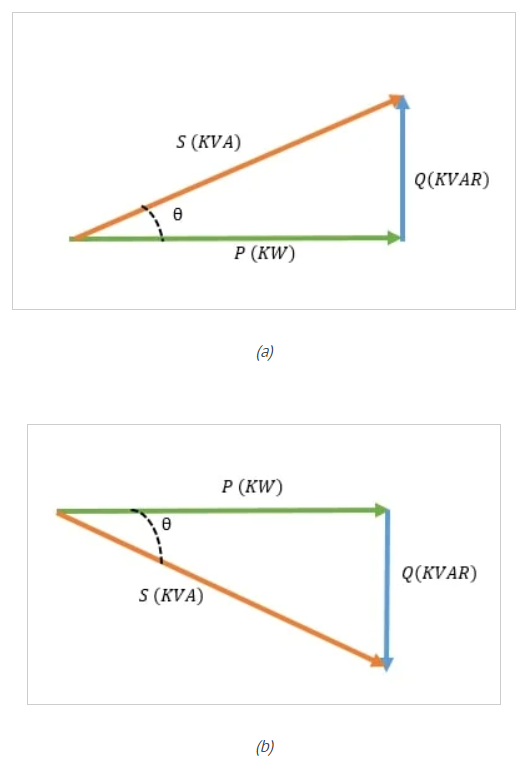
Power triangle showing relationship between apparent power (kVA), active power (kW), and reactive power (kVAr)
How to Avoid Buying Fake Cummins and Perkins Generators in China
| Characteristic | Authentic International Engines (Cummins/Perkins) | High-Quality Chinese Alternatives (Weichai/Yuchai) |
|---|---|---|
| Origin & Verification | Verifiable global serial number database | Verifiable factory records in China |
| Global Warranty | Worldwide support network | Requires strategic parts sourcing or supplier warranty |
| Price Premium | High (international brand premium) | Excellent value for money |
| Counterfeit Risk | Extremely high (many clones in China) | Low (often genuine local brands) |
Critical Engine Models
| Engine Series | Cylinders | Displacement | kVA Range |
|---|---|---|---|
| Perkins 1104 | 4 | 4.4L | 50-100 |
| Perkins 1106 | 6 | 6.6-7.0L | 150-250 |
| Cummins 4BT | 4 | 3.9L | 50-90 |
| Cummins 6BT | 6 | 5.9L | 100-200 |
Serial Number Verification
Perkins Engines
Located on a machined pad on the left side of the cylinder block. Format: 2 letters + 6 digits (e.g., AB123456). Prefix indicates manufacturing location: "A"=Peterborough, UK; "B"=Stafford, UK; "C"=Curitiba, Brazil; "N"=Nanjing, China [57].
Cummins Engines
DCEC (Xiangyang): Right side of gear housing cover. CCEC (Chongqing): Left side of cylinder block. Verify via Cummins QuickServe Online [183].
Weichai Engines
Right side of cylinder block near the front. Alphanumeric codes with embedded manufacturing date and facility information. Verify through Weichai service network.
Generator Quality Check: 100% Copper vs Aluminum Windings
Why Material Matters
Field Detection Methods
Magnetic Test
Neodymium magnet doesn't attract to copper, weak attraction to aluminum
Weight Comparison
Stamford UC274E: Copper ~1,850kg vs. Aluminum ~1,350kg (30% difference)
Scratch Test
Copper: reddish-orange color. Aluminum: silvery-white appearance
Thermal Imaging Survey
Aluminum shows steeper temperature gradients under load
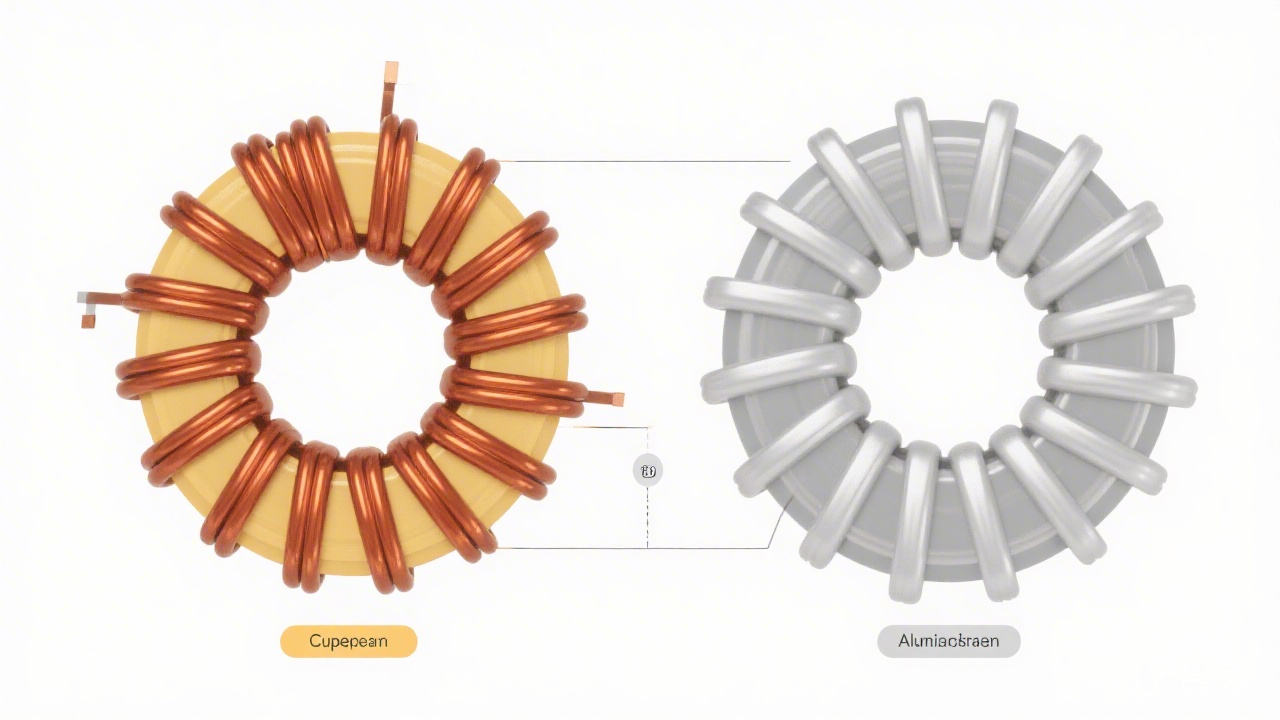
Visual comparison of copper (reddish) and aluminum (silvery) generator windings
Original vs Counterfeit Engines: Finding Genuine Equipment in China
Navigating the complex landscape of authentic, licensed, and counterfeit power equipment
Perkins Engine Authentication System
Genuine UK Perkins
- • Series prefix: "A" (Peterborough), "B" (Stafford)
- • Precision Perkins logo casting on valve cover
- • Laser-etched serial plate with holographic elements
- • Holset turbochargers on turbo models
- • Perkins-branded fuel equipment
Licensed Weichai-Perkins
- • Perkins-designed engines at Weichai facilities
- • Perkins-spec tooling and quality systems
- • Series prefix: "C" (China production)
- • Equivalent warranty coverage to UK production
- • Genuine Perkins product with licensed status
"Perkins Type" / Counterfeit
- • Visual similarity without engineering equivalence
- • Inferior materials and precision
- • No Perkins database record or warranty
- • African case: failure at 1,970 hours vs 10,000+ expected [518]
- • Non-genuine components throughout
Cummins Engine Authentication: Joint Ventures vs Original
Joint Venture Manufacturers
DCEC (Dongfeng Cummins)
Established 1992 in Xiangyang, Hubei Province. Produces B, C, L series and ISB/ISC/ISL engines. Distinctive DCEC branding and serial number format [183].
CCEC (Chongqing Cummins)
Established 1995, specializes in heavy-duty engines: NT855, K19, K38, K50, QSK. Counterfeit CCEC case included units without serial number registration and Dongfang turbochargers instead of Holset [520].
Authentication Process
Nameplate Analysis
Precision engraving, corrosion-resistant material, secure mounting with tamper protection
Casting Quality
Smooth surface, consistent parting lines, foundry identification codes
ECU Verification
Manufacturer part numbers, software version markings, diagnostic tool compatibility
Documentation Cross-Reference
Purchase orders, factory test reports, customs documentation, manufacturer database verification
Enforcement Case
Hino Motors (Toyota Subsidiary) — 2025: $1.6 billion in penalties for submitting false emissions test data and illegally importing 110,000+ non-compliant diesel engines (2010-2022), including a five-year ban on self-importing diesel engines [423][425].
This demonstrates serious consequences of importing non-compliant engines and the importance of proper verification.
Need a Professional Sourcing Agent in China?
Don't risk your investments with unverified suppliers. Let our Shanghai-based experts find reliable generator manufacturers, conduct comprehensive technical verification, and negotiate the best terms for you.
How to Conduct Factory Acceptance Testing (FAT) for Generators in China
Comprehensive inspection and testing procedures for pre-shipment verification
Load Bank Testing Standards for Exported Industrial Equipment
Testing Protocol: 80% Load Minimum 60 Minutes
| Stage | Load % | Duration | Critical Measurements |
|---|---|---|---|
| 1 | 0 (no load) | 15 min | Voltage regulation, frequency stability, baseline temperature |
| 2 | 25 | 15 min | Voltage, frequency, exhaust temperature, coolant temperature |
| 3 | 50 | 15 min | As above, plus fuel consumption |
| 4 | 75 | 30 min | Full thermal monitoring, voltage regulation under heating |
| 5 | 80 | 60 min | Extended operation test, maximum temperature stabilization |
| 6 | 100 | 15 min | Peak power verification (if prime rated) |
| 7 | 110 | 10 min | Overload capability (standby use only) |
Performance Tolerances
- • Coolant: 85-95°C at full load
- • Oil: 10-15°C above coolant
- • Exhaust: 450-600°C (engine dependent)
- • Generator: within insulation class
Critical Success Factors
- ✓ Independent load bank with resistive-inductive capability
- ✓ Calibrated instruments with current certification
- ✓ Witness testing with buyer representative
- ✓ Comprehensive documentation with authorized signature
- ✓ Thermal imaging survey for hotspot and undersizing detection
- ✓ Fuel consumption verification against manufacturer SFC
Comprehensive Guide to Visual Inspection of Diesel Generators Before Shipment
Silent Canopy Construction
| Parameter | Specification | Verification |
|---|---|---|
| Steel Thickness | Min 1.5mm structural, 1.2mm non-structural | Ultrasonic thickness gauge, multiple points |
| Surface Finish | Powder coating, 60-120μm | Coating thickness gauge, adhesion tape test |
| Sound Insulation | Mineral wool, 50-100mm, 80-120 kg/m³ | Visual inspection, density sampling |
| Noise Level | <75 dB(A) at 7m standard; <65 dB premium | Sound level meter during FAT |
Documentation Verification
Factory Test Report
Must include: complete parameters, calibrated instruments, authorized signature, company chop
Certificate of Origin
Chamber of commerce verification, matching shipping documents
Serial Number Plates
Laser engraving, corrosion-resistant material, secure mounting with tamper protection
Compliance Certificates
CE, UL, EPA appropriate for destination, current and genuine
Logistics and Delivery Best Practices When Importing Generators from China
Ensuring safe transportation and efficient container utilization
Mandatory Export Packaging for Heavy Equipment from China
ISPM 15 Fumigation Requirements
Mandatory for international wooden packaging: heat treatment (56°C core for 30 minutes) or methyl bromide fumigation with official IPPC marking [22].
Non-compliant packaging faces rejection, destruction, or return at destination port
Moisture Protection
- • Vapor barrier packaging with heat-sealed seams
- • Desiccant placement (1.5× unit weight for 60-day protection)
- • Humidity indicator cards for arrival inspection
- • Condensation prevention for ocean freight
Lifting Point Verification
- • Clearly marked with rated capacity
- • Positioned for balanced lifting without component stress
- • Verified through visual inspection and dimensional check
- • Center of gravity clearly indicated
How to Optimize Generator Loading in Shipping Containers
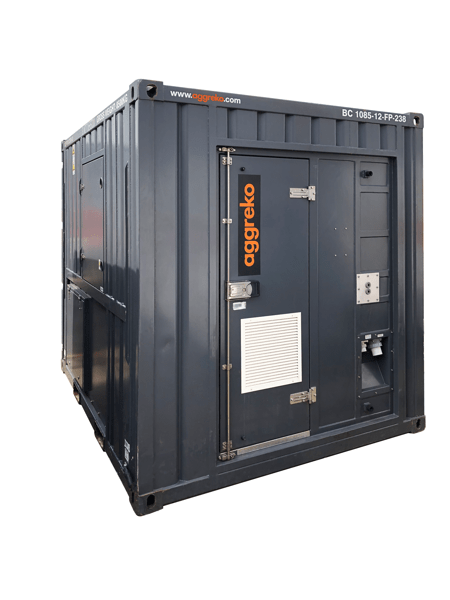
Container loading configurations for optimal generator transportation
| Generator Size | 20ft Container | 40HQ Container | Loading Considerations |
|---|---|---|---|
| 100 kVA silent | 2 units | 6-8 units | End-to-end, center securing; weight distribution |
| 100 kVA open | 3 units | 10-14 units | Stacked with separation, heavy securing |
| 250 kVA silent | 1 unit | 3-4 units | Centered, extensive lashing |
| 500 kVA silent | 1 unit (partial) | 2 units | End-to-end, extensive securing; may require flat rack |
Weight Verification and Compliance
Verified Gross Mass (VGM) is mandatory under SOLAS regulations. Independent weighing protocols with certified weights and current calibration are required.
Discrepancies exceeding ±5% between declared and verified weight trigger investigation and potential cargo refusal.
Customs Compliance and Electrical Standards for Importing Generators from China
Navigating certification systems, voltage standards, and emissions requirements in global markets
European Union and EEA
CE Certification Requirements for Diesel Generators in the EU Market
- • Machinery Directive 2006/42/EC
- • EMC Directive 2014/30/EU
- • Low Voltage Directive 2014/35/EU
- • Declaration of Conformity required
Emissions Standards
EU Stage V NRMM (Regulation 2016/1628) requires type approval with DPF+SCR systems for most power ranges
Noise Regulations
Directive 2000/14/EC for outdoor equipment requires accredited testing and sound power level declaration
Voltage/Frequency: 400V/230V (3φ/1φ), 50Hz ±10% voltage, ±2% frequency tolerance
USA and Canada
Safety Certification
- • UL 2200 (USA)
- • CSA C22.2 No. 100 (Canada)
- • NRTL listing required
- • Factory surveillance program
Emissions Standards
EPA Tier 4 Final, CARB requirements (California). Engine certification database verification mandatory
Customs Requirements
ACE system entry, HS codes 8502.11-8502.13, EPA compliance confirmation required
Voltage/Frequency: 480V/277V or 208V/120V, 60Hz ±5% tolerance
African Markets
Latin America
SASO and SABER Compliance for Importing Diesel Generators from China
Eurasian Economic Union (EAEU)
EAC Certification Requirements
- • TR TS 010/2011 Machinery Safety
- • EAC Declaration (self-certification) or EAC Certificate (mandatory third party)
- • Technical documentation in Russian language mandatory
- • EAC marking and registration in Rosakkreditatsiya unified database
Market Access Considerations
- • Russia, Belarus, Kazakhstan, Armenia, Kyrgyzstan
- • Harmonized technical regulations between member states
- • Local representative often required for certification
- • Post-market surveillance and compliance monitoring
Industry Application Requirements
Specific characteristics for critical infrastructure and specialized applications
Construction and Rental Fleets
Power Range
20-100 kVA predominant, matching tool peak demand with 20% margin
Noise Requirements
Standard: <75 dB(A) at 7m; Urban: <65 dB with premium sound attenuation
Mobility
Trailer-mounted units, forklift pockets, integrated lifting points
Durability Standards
Minimum IP23 (IP44 for dusty conditions), reinforced construction
Fuel Capacity
8-12 hours runtime at 75% load minimum, with external fuel connection capability
Telecommunications and Data Centers
ATS Integration
Transfer time <4 seconds with mechanical/electrical interlock to prevent server clock errors
Frequency Stability
Steady-state ±0.5% tolerance to protect sensitive power supplies and electronics
Voltage Regulation
±1% with AVR (automatic voltage regulator) for equipment compatibility
Autonomy
8-24 hours without refueling, matching fuel logistics and outage planning
Remote Monitoring
Modbus, SNMP, or proprietary protocols for centralized fleet management
Mining and Heavy Industry Applications
High Altitude
Operation above 2,000m requires engine derating and altitude kits
Dust Contamination
Two-stage filtration with pre-cleaner and safety element
Explosion Hazard
Explosion-proof generators, fire-resistant enclosures, ATEX/IECEx
Continuous Load
COP (Continuous Power) rating with enhanced cooling
Healthcare, Commercial and Institutional Applications
Critical Requirements
Compliance Standards
Standard for Emergency and Standby Power Systems
Medical facilities, emergency exits, intensive care units
As-built drawings, test reports, maintenance procedures
Contract Negotiations and Payment Security with Chinese Factories
Protecting your investments through strategic payment structures and fraud prevention
Secure Payment Terms (T/T and L/C) for Equipment Sourcing in China
Recommended: 30/70 Structure
Suitable for documented FAT with reliable suppliers
Enhanced: 20/30/30/20 Structure
High Risk: 100% Prepayment
Extreme risk — completely avoid
Never appropriate without enhanced security measures and established trust
Communication Red Flags
Sudden Bank Account Change
Unannounced change to payment instructions with pressure to update immediately.
"Subsidiary" Payment Request
Payment to a legal entity different from the contracting party, often claiming "we're a subsidiary but pay the parent".
High-Pressure Tactics
Artificial urgency, claims about competitors, or quality threats to coerce rushed payment.
Evading Technical Questions
Inconsistent or non-responsive answers to technical specification inquiries.
Enforcing Warranty Obligations with B2B Suppliers in China
Typical Warranty Terms
| Term | Typical Specification | Practical Implication |
|---|---|---|
| Operating Hours | 1000 hours | Exhausted in 4-5 months of continuous use; 12-18 months of standby use |
| Calendar Term | 12 months | Controlling factor for low-load applications |
| Coverage Scope | Parts only vs. parts and labor | Excluding labor accounts for 40-60% of repair costs |
| Service Network | Requires authorized service | Geographic accessibility determines applicability |
Negotiation Priorities
Extended Operating Hours
Critical for continuous applications where 1000 hours = 4-5 months operation
Parts and Labor Coverage
Ensure comprehensive coverage with defined response times and transport cost allocation
Local Service Authorization
Establish local service authorization or pre-agree on transport cost allocation for remote sites
Enforcement Strategy
Document all communications, maintain proper service records, establish local service relationships before warranty expiration
Real-World Case Studies (Anonymized)
Lessons learned from actual import experiences and fraud investigations
Case Study 1: Four-Cylinder Engine Substitution
Background
A European construction equipment rental company ordered 50 generator sets rated at 150 kVA, specifying Perkins 1106A-70TAG4 engines (6-cylinder, 186 kW).
Discovery
Pre-shipment inspection revealed serial number formats inconsistent with the Perkins 1106 series. Physical examination—counting exhaust ports and injection lines—confirmed a 4-cylinder configuration despite the 1106 model designation on the nameplate.
Investigation
Detailed measurements and component comparison identified the engines as Perkins 1104 series (4-cylinder), with a significantly lower power rating, bearing modified or substituted nameplates implying the 1106 identity.
Financial Impact
Production delayed by 6 weeks; procured from an alternative supplier at a 15% premium; wasted inspection and travel costs of €8,500.
Preventive Measures Implemented
- ✓ Compulsory engine serial number verification directly with Perkins before production commences
- ✓ Physical verification of engine dimensions against specifications during in-process inspection
- ✓ Witnessed Factory Acceptance Test (FAT) with an independent load bank up to rated capacity
- ✓ Explicit contract penalties and payment retention for specification deviations
Case Study 2: Aluminum Windings Discovered During Inspection
Original Specification
100% copper Stamford UCI224E alternators specified for backup power at telecom base stations in Nigeria, with a premium price reflecting genuine Stamford quality.
Discovery Process
Third-party pre-shipment inspection included a magnetic test on the alternator windings. Anomalous magnetic attraction indicated aluminum content, inconsistent with the copper specification.
Verification Methods
- • Weight comparison with an original Stamford revealed a 30% mass reduction, consistent with aluminum substitution
- • Thermal imaging showed anomalous hot spot patterns
- • Scratch test revealed silver material beneath the surface coating
Factory Response
Initial denial claiming a "special copper alloy" with magnetic properties. Presentation of multiple independent test results and Stamford specifications prompted an admission of aluminum winding use, explained away as a "temporary supply shortage."
Resolution and Prevention
Complete order rejection with a refund of the advance payment via a Letter of Credit dispute. Supplier blacklisted with an industry notification. Replacement order placed with enhanced verification protocols, including factory inspection of the alternators and material certification.
Key Lesson: Factory documentation presented forged Stamford certificates and falsified test reports. Physical material testing is essential regardless of documentation authenticity.
Case Study 3: Industrial Voltage Mislabeling
Order Specification
400V/230V three-phase generators for direct connection to a European factory distribution system, with required compatibility certification.
Installation Issue
Upon arrival and commissioning, the generators outputted 380V phase-to-phase. When adjusted via the AVR to reach 400V, the units suffered from instability, overheating, and triggering over-excitation protection circuits.
Investigation Findings
- • The alternator was physically wound for 380V nominal output (common in older Chinese domestic specs)
- • The rating plate had been restamped or falsely printed as 400V
- • The AVR was forced out of its design range to achieve the required voltage
Root Causes
The generator manufacturer used universal nameplates marked 400V/230V, while the internal configuration and documentation confirmed a 380V/220V setup. They assumed the voltage was "close enough" for European applications.
Resolution and Prevention
Contract protection via documented evidence of measurements and specification breach. Achieved full replacement with units featuring verified configurations and strengthened Factory Acceptance Tests (FAT), including under-load voltage verification.
Preventive Measures: Voltage verification under various load conditions during FAT, phase rotation verification, and compatibility testing with real load profiles.
Case Study 4: Counterfeit Perkins Failure in the African Market
Purchase Background
A Nigerian manufacturing company purchased a "genuine Perkins" 150 kVA generator through a local dealer at a price 25% below the authorized distributor. The generator had a Perkins-branded canopy, a Perkins-logo control panel, and an engine with a Perkins nameplate showing model 1106A-70TAG2 and a plausible serial number format.
Catastrophic Failure
After 1,970 operating hours (14 months of standby service with weekly exercising), the engine suffered a catastrophic failure during a grid outage: severe vibration, loss of oil pressure, automatic shutdown, connecting rod bearing failure, and crankshaft damage.
Post-Failure Analysis
- • Serial Number Check: "Record not found" despite a plausible format
- • Engine Block Casting: Rough finish with visible porosity
- • Internal Components: Non-genuine Perkins pistons, substandard bearing material
- • Crankshaft Analysis: Vermicular cast iron instead of forged steel
- • Fuel Injection Pump: Branded "Bosch" but lacking internal Bosch identification
Financial Impact
- • Emergency generator rental: $8,500
- • Engine replacement (genuine Perkins): $18,000
- • Production losses: $45,000 estimated
- • Total cost exceeded authorized distributor price by 60%
Critical Lessons
- ✓ Compulsory verification with an authorized distributor via the global Perkins website before purchase
- ✓ Physical inspection focusing on casting quality, nameplate attachment method, and serial number format
- ✓ Documentation review against the global Perkins warranty system
- ✓ Due diligence costs significantly outweigh potential savings from unauthorized sources
- ✓ High probability of premature failure and total loss when sourcing from unauthorized channels
Final Analysis: A fully counterfeit build with an unidentified Chinese engine block, a modified fuel injection system, and substandard internal components throughout. The generator was manufactured for external resemblance to a Perkins unit, while lacking any genuine Perkins parts internally.
Sourcing Agent Insights: Finding Tier 1 Generator Factories in China
Strategic intelligence from inside China's diesel generator manufacturing industry
Factory Tier Classification System
| Tier | Characteristics | Annual Volume | Export Focus | Risk Profile |
|---|---|---|---|---|
| Tier 1: JV/Licensed | Cummins, Perkins, Deutz JVs; ISO 9001, IATF 16949; direct Western technical involvement | 5,000-15,000 units | 60-80% | Lowest: Verified technical compliance, warranty support |
| Tier 2: Large Independents | Weichai, Yuchai, SDEC; ISO certified; partnerships with component brands | 1,000-5,000 units | Mixed Domestic/Export | Low-Moderate: Verify specific configuration, intensive inspection |
| Tier 3: Regional Manufacturers | Limited export experience; variable quality; opportunistic sales | 100-1,000 units | Opportunistic | Moderate-High: Intensive verification, limited lifespan |
| Tier 4: Trading/Ghost Factories | No manufacturing assets; outsourced production; inconsistent sourcing | Variable | Purely Opportunistic | Highest: Avoid entirely |
The "Ghost Factory" Phenomenon
Detection Indicators
Strong resistance to unplanned factory inspections or sudden visit requests
Cannot provide detailed process flowcharts or quality control documentation
Variable quality between shipments, unexplained specification changes
Photos online look generic, duplicated across multiple sites, or do not match claimed capabilities
Verification Protocol
Direct Factory Visit
Observation of the production line, process verification, and review of quality system documentation
Serial Number Correlation
Confirm that serial number ranges and nameplate formats match claimed production capabilities and volume
Quality System Documentation
Request and verify quality control procedures, test reports, and equipment calibration records
Critical Component Sourcing Analysis
| Component | Premium Suppliers | Substitution Risk | Verification Method |
|---|---|---|---|
| Engine | Perkins (UK/Weichai licensed), Cummins (US/DCEC/CCEC), Deutz, Volvo Penta | High | Serial number check, physical inspection, factory audit |
| Alternator | Stamford, Leroy-Somer, Mecc Alte | Moderate | Magnetic test, weight comparison, thermal imaging |
| AVR/Controller | Deep Sea Electronics, ComAp, Woodward | Moderate | Model number verification, functional testing |
| Turbocharger | Holset, Garrett, BorgWarner | High | Visual inspection, part number verification |
Emerging Trends: The Evolution of Chinese Engine Quality
Technological Progress
Chinese diesel engine manufacturing has undergone substantial quality evolution, with leading manufacturers reaching technical capabilities approaching Western standards
Weichai's acquisition of European engine technologies and substantial R&D investments have significantly reduced performance and reliability gaps
Leading Chinese manufacturers are now achieving ISO 9001 and IATF 16949 certifications with component quality approaching global standards
Market Perception Reality
Persistent Perception Gaps
International markets often retain outdated perceptions of Chinese manufacturing quality, creating both opportunities and challenges for legitimate manufacturers
Verification Continues to be Essential
Regardless of geographic origin, verification remains critical: ensuring a genuine manufacturer product with the appropriate specification, rather than a counterfeit or misrepresented alternative
Price-Quality Correlation
Significant price gaps between Chinese and Western manufacturers remain, but products of equivalent quality demand a premium price reflecting actual manufacturing costs
Strategic Recommendation: Evaluate Chinese manufacturers on individual merits rather than geographic origin. Focus on specific product quality verification, warranty support, and long-term serviceability rather than assumptions based on manufacturing origin.
Comprehensive Generator Pre-Shipment Inspection Checklist
A complete field verification protocol for diesel generator procurement
1. Pre-Qualification: Factory and Documentation Review
2. Pre-Shipment Inspection: Physical Verification
3. Load Testing and Performance Verification
4. Documentation and Certification Validation
5. Packaging and Logistics Verification
Additional Critical Checks
Critical Success Factors
- • Independent verification is always required regardless of supplier reputation
- • Document every stage with photographic evidence and written records
- • Establish clear communication protocols and escalation procedures
- • Maintain skepticism toward prices significantly below the market average
- • Build relationships with authorized distributors and manufacturer representatives
- • Consider Total Cost of Ownership (TCO), not just initial purchase price
Glossary of Key Terms
A comprehensive reference of technical, commercial, and regulatory terminology
Commercial & Contracting Terms
OEM (Original Equipment Manufacturer)
A legal entity that designs and manufactures the complete product with original specifications and quality control
ODM (Original Design Manufacturer)
Designs and manufactures products to be sold under another company's brand according to their specifications
SKD (Semi-Knocked Down)
Partially assembled components for final assembly at destination, typically for local content rules
CKD (Completely Knocked Down)
Unassembled components for complete assembly at destination, often to lower tariffs or secure local manufacturing incentives
Prime Power (PRP)
Unlimited hours of annual operation at variable load; 10% overload capable for 1 hour in every 12
Standby Power (ESP)
Limited to 500 hours annual operation; no overload capability; intended for emergency backup use only
Continuous Power (COP)
Unlimited hours at a constant 100% rated load; no overload capability
Technical Specifications
kVA (Kilovolt-ampere)
Apparent power in AC systems; the vector sum of real and reactive power; represents total power flow
kW (Kilowatt)
Real power doing useful work; calculated as kVA × Power Factor
cos φ (Power Factor)
Cosine of phase angle between voltage and current; ratio of real to apparent power; typical industrial valid is 0.8
IP Rating (Ingress Protection)
Degree of protection against solids and liquids (e.g., IP23, IP44, IP54); first digit is solids, second is liquids
dB(A)
A-weighted decibel; sound pressure level measurement with frequency weighting corresponding to human hearing sensitivity
Ambient Derating
Power capability reduction required for operating above standard 25°C or 40°C; typically 2% for every 5°C above reference
Certification & Standards
CE (Conformité Européenne)
EU product safety marking indicating conformity to applicable directives; a legal requirement, not a quality mark
UL (Underwriters Laboratories)
US safety certification organization; UL 2200 standard applies to stationary engine generator assemblies
CSA (Canadian Standards Association)
Canadian certifying body; CSA C22.2 No. 100 standard applies for Canadian generator certification
EAC (Eurasian Conformity)
Certification for Eurasian Economic Union markets; indicates compliance with unified technical regulations
SONCAP
Standards Organisation of Nigeria Conformity Assessment Program; mandatory pre-shipment verification for Nigerian imports
INMETRO
Instituto Nacional de Metrologia, Qualidade e Tecnologia; National standards body of Brazil for certification
ISO 8528
International standard for alternating current generator sets driven by reciprocating internal combustion engines
Note: This glossary presents general terms in the diesel generator industry. Always review specific definitions and requirements in the current standards and manufacturer documentation for your particular application.